Why does my garden feel smaller than it really is?
Not every small garden feels cramped, and not every large garden feels spacious.
One of the biggest misconceptions I come across is that creating a beautiful garden is all about having more space. In reality, it's often about making better use of the space you already have.
I've visited surprisingly compact gardens that feel wonderfully generous, and much larger gardens that somehow feel confined. The difference is rarely the size itself it's how the space has been designed.
If your garden feels smaller than it really is, there's usually a reason.
You can see everything at once
Standing on your patio, can you see every corner of your garden immediately?
If the answer is yes, your eye has nowhere to travel. The moment you take in every boundary, your brain instantly understands the size of the space.
One of the simplest ways to make a garden feel larger is to create a sense of discovery. A gently curving path, layered planting or a carefully positioned tree can partially screen what's beyond, encouraging you to explore rather than revealing everything at once.
A well-designed garden doesn't show you everything in a single glance. It invites you to move through it, discovering new views as you go.
Your borders are too narrow
Many gardens have a large lawn surrounded by thin strips of planting.
It seems like the obvious way to maximise space, but it often has the opposite effect.
One mistake I see time and again is homeowners assuming that more lawn automatically makes a garden feel bigger. In reality, it often emphasises the boundaries, making the whole space feel like one large rectangle.
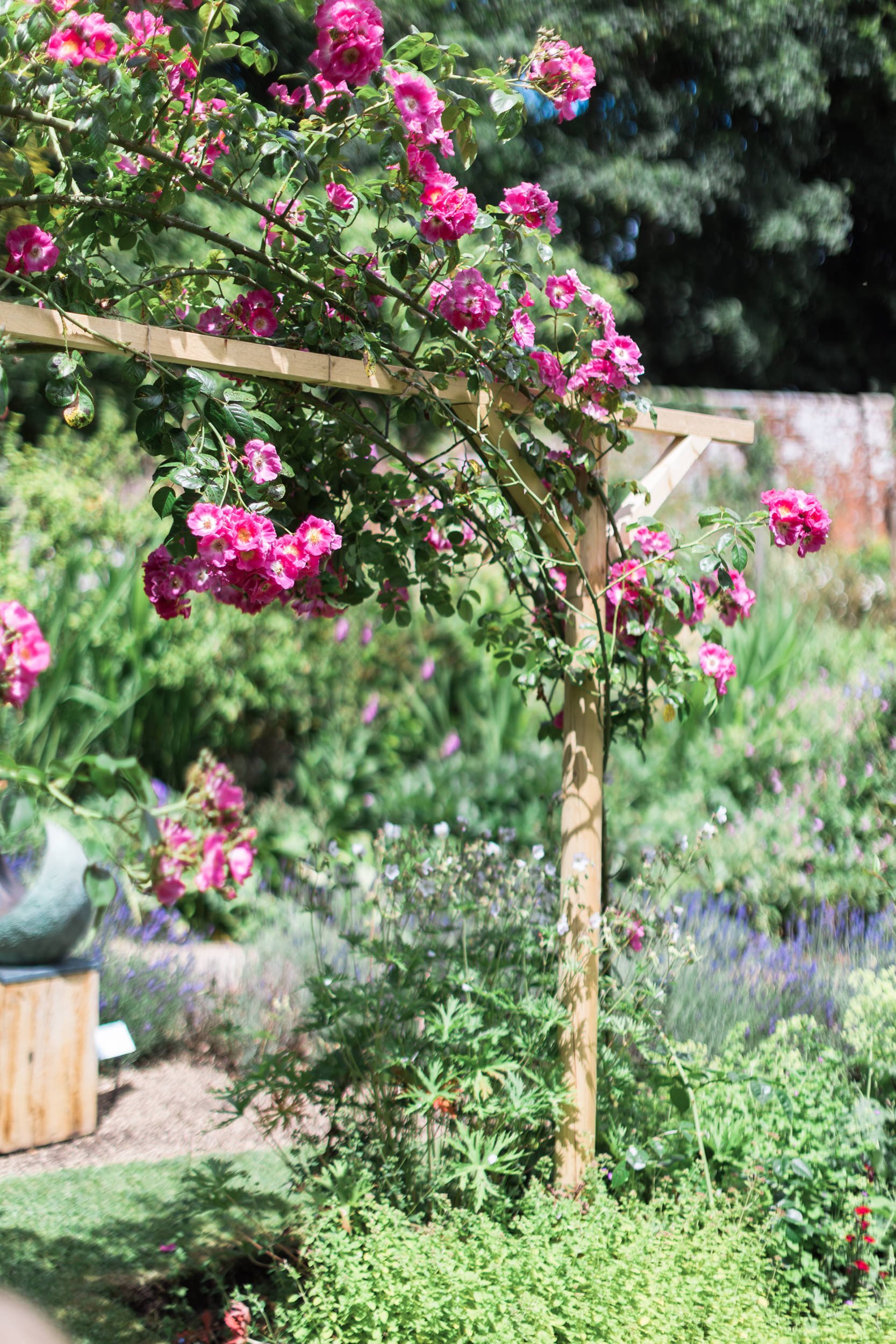
Generous planting borders soften those edges and create layers that draw your eye through the garden rather than straight to the fence. Counterintuitively, reducing the size of the lawn can actually make the entire garden feel more spacious.
Everything is the same height
A flat garden can feel surprisingly two-dimensional.
We naturally experience a space in three dimensions, yet many gardens only make use of one. Introducing height encourages your eye to travel upwards as well as across the garden, adding richness and creating a greater sense of space.
This doesn't necessarily mean large trees. Layered planting, ornamental grasses, carefully chosen small trees, pergolas or even changes in level can all add depth and interest.
It's these layers that make a garden feel immersive rather than flat.
Every area has the same purpose
The most inviting gardens often have different destinations.
Perhaps it's somewhere to enjoy your morning coffee, a sunny spot for entertaining, or a quiet corner to sit with a book.
Even in a compact garden, creating subtle zones gives the impression that there's more to discover. Instead of feeling like one open space, the garden unfolds naturally as you move through it.
Good garden design isn't about filling every corner. It's about creating a journey.
Think differently about space
Making a garden feel larger isn't about squeezing more into it. It's about creating balance, structure and a sense of movement.
The most successful gardens don't make you think, "This feels bigger."
They make you slow down.
You wander a little further.
You discover a favourite place to sit.
You notice the evening light catching the planting.
Without really knowing why, you simply want to spend more time there.
That's what thoughtful garden design is all about.
Not making your garden bigger, but helping it feel more generous, more welcoming and more enjoyable to live with.
If you've ever found yourself looking at your garden and thinking, "I just don't know what to do with this space," you're certainly not alone.
Sometimes the answer isn't more space at all.
It's simply seeing the space you already have differently.
And sometimes, all it takes is a fresh pair of eyes to help you discover what's possible.